We question how the County and the North Ranch will sustain the viability of natural resources and wildlife corridors of the North Ranch to the planning horizon of 2060-2080, while the Ranch operates as a working ranch consisting of cattle ranching, farming, hunting, and citrus production. Our objections to the plan are as follows:
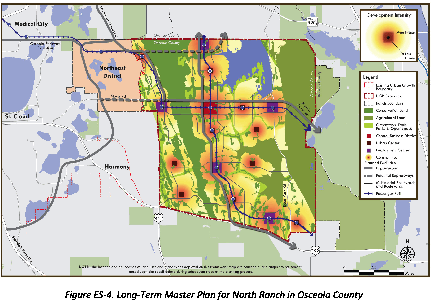
Transportation: Establishment of new transportation corridors through conservation lands and
rural/agricultural lands potentially diverts state and federal transportation
funding from a more integrated transportation network to serve
existing/approved development areas. Additionally, proposed expressways, such
as the new Pineda Causeway link crossing the St. Johns River, will fragment
sensitive ecosystems and intrude into public conservation lands of Brevard
County. Alternatively, the Sierra Club recommends using existing bridge alignments at SR 520
and US 192.
Source: North Ranch Sector Plan, page ES-7
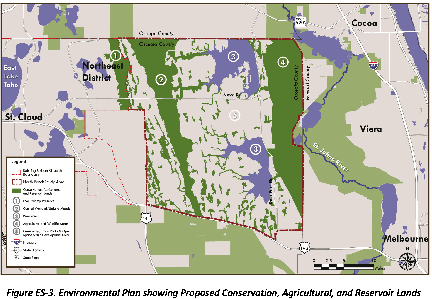
Reservoir Resources: The plan states - These water resources, in addition to providing valuable water supply, provide benefits to fish and wildlife resources, and add a lentic habitat type to the Environmental Plan. ["Lentic" habitat is characterized by standing or slow moving water]
Reservoir Resources: The plan states - These water resources, in addition to providing valuable water supply, provide benefits to fish and wildlife resources, and add a lentic habitat type to the Environmental Plan. ["Lentic" habitat is characterized by standing or slow moving water]
The Sierra Club
objects to:
·
The proposed expansion
of the Taylor Creek Reservoir (7,104 acres) and the creation of the
Pennywash/Wolf Creek Reservoir.
·
Creating the
decommissioned Pennywash/Wolf Creek Reservoir (5,548 acres) that will flood and
destroy thousands of acres of freshwater forested wetlands. A similar plan proposed by the U.S. Army Corps of
Engineers in the 1970’s was finally rejected by the State of Florida, as noted
in the Final Environmental Impact Statement of 1986.
·
Upon receipt of
authorization for construction, Pennywash/Wolf Creek acreage will be counted in
the required agricultural land preservation requirement.
·
The Sierra Club
objects to these long-term water reservations, as they potentially impact the
already stressed St. Johns River.
POLICY 6.5: CONVERSION RATIO FOR CONSERVATION
EASEMENTS AND AGRICULTURAL RESTRICTIONS
Proposed “sprawl-like”
development, including new transportation facilities, will fragment
conservation lands and wildlife habitat. For every acre of land within a CMP/DSAP [Conceptual Master Plan/Detailed Specific Area Plan], a ratio of 0.508 conservation acres
for every acre of developable land area and 0.238 acres of Agricultural Lands
for every acre of developable land area, as identified in Map 5 (North Ranch Planning
Area Environmental Plan), must be placed into a conservation easement or
agricultural covenant. The Sierra
Club recommends a greater ratio of conservation lands for every acre of
developable land and objects to the inclusion of the proposed Pennywash/Wolf
Creek Reservoir into the agricultural land preservation requirement.
The
North Ranch includes portions of sensitive headwaters of the Upper Kissimmee
River Basin, Econlockhatchee River Basin and the St. Johns River Basin. While the plan proposes to protect the
Econlockhatchee River 100-year floodplain, there are no protections for
developing within the St. Johns and Upper Kissimmee River 100-year floodplains.
The proposed intensity of the North Ranch Sector Plan has the potential to
significantly fragment and impact these natural resources as well as the
sensitive ecosystems of Orange and Brevard Counties. The proposed North Ranch Sector Plan needs more
scrutiny, including stakeholder input.
The
Sierra Club respectfully requests the Osceola County Planning Commission consider the Sierra
Club’s recommendations not to transmit.
--Marjorie
Holt
Chair/Conservation
Chair
Sierra
Club Central Florida Group

